Advertising can bring people to a website. It cannot make an unclear offer, broken form or confusing payment step disappear. Before increasing a campaign budget, follow the journey a first-time customer will take from the advert to a completed enquiry.
A website being ready for Google Ads, Meta or TikTok means that its landing pages and agreed measurement can support a campaign. It does not mean the campaign will be profitable or that every visit can be identified.
Match the page to the advert
If the advert promises a specific service, the landing page should make that service obvious. Repeat the substance of the offer, not just the exact words. A visitor should quickly understand who the service is for, what is included, what it costs or how to get a quote, and what happens next.
Different services often need different destinations. Someone looking for an online shop should not have to work through a brochure-website package to find an ecommerce enquiry form. Someone looking for a CRM needs to understand the software scope, not just see general web-design claims.
Choose one main next step
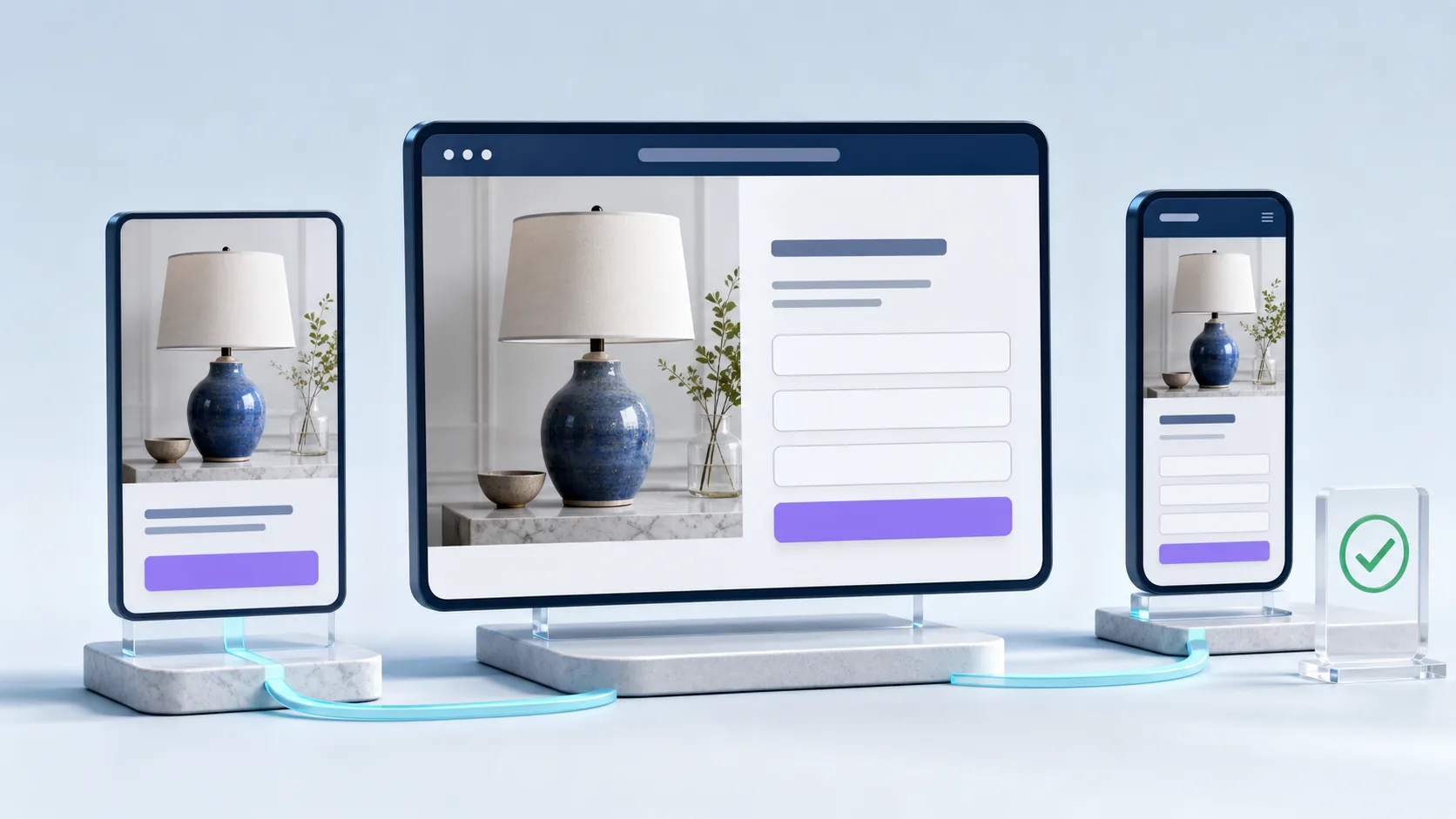
A focused service page can offer a main enquiry form and a secondary contact route such as WhatsApp. The two routes should support the same decision. Button labels should explain the action: requesting a quote is different from paying a deposit.
Keep the first form proportional to the commitment. Ask for the information needed to reply usefully, then collect detailed content once the project moves forward. Explain any payment obligation before the visitor enters checkout.
Complete the journey on a real phone
Open the page on mobile, dismiss or manage the cookie banner, read the offer and complete a test enquiry. Check that sticky contact buttons do not cover fields. Make one deliberate mistake in the form and confirm that the error is clear and your other details are retained.
Then check the result at the business end. Was the enquiry saved? Did the right person receive an email? Is the confirmation message truthful? If payment is involved, use the provider's appropriate testing environment and verify the payment record rather than relying on a page visit.
Measure outcomes, not only clicks
A button click is a useful diagnostic event, but it is not necessarily a lead. A successfully saved enquiry is a stronger signal. A confirmed payment is a different outcome again. Keep those events separate so reports do not imply that every interaction is a sale.
Google Analytics has a recommended generate_lead event. The important implementation detail is when you send it: after the enquiry is accepted, not simply when a visitor presses Submit. Avoid sending names, email addresses or the contents of the enquiry as analytics event parameters.
Expect reporting differences
Ad clicks and Analytics users measure different things. Repeat clicks, visits that do not finish loading, consent choices, browser restrictions and reporting delays can affect the relationship between them. A difference is a reason to test the setup, not immediate proof that the traffic is fraudulent.
Check that the correct property is receiving events and that the reporting dates and time zones match. Use a controlled test and the platforms' diagnostic tools before making a commercial decision from a small sample. Keep optional tracking aligned with the visitor's choices; a pixel is not a substitute for a sound consent setup.
Review the offer before scaling
Look at the actual search terms or audience, the promise in the advert and the page the visitor sees. Relevant traffic with no successful form submissions may point to friction or a weak offer, but it can also reveal technical problems. Inspect the whole journey before assuming that a price reduction is the answer.
Our business website package includes the agreed enquiry and advertising-readiness features. For a shop or a more complex customer journey, explore ecommerce websites or custom platforms. Ad account setup, campaign management and results are separate from the website build.